

Casement Window Replacement in the Chicago Suburbs
Casement windows are the most airtight operable window style available. In a climate like Chicago's, where winters test every weak point in the building envelope, that matters.
What Is a Casement Window?
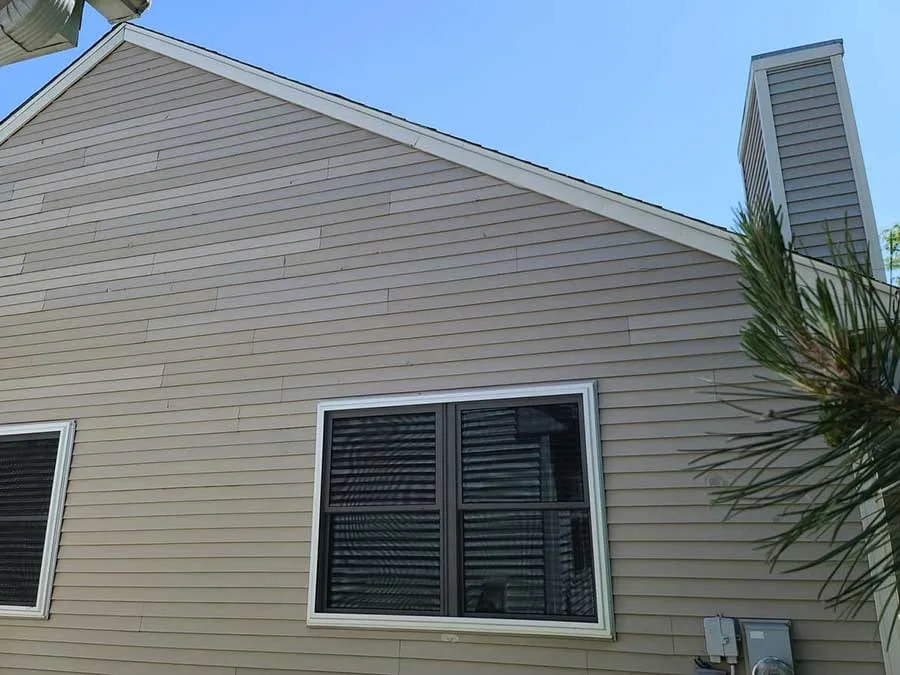
A casement window is a window hinged at the side that opens outward via a crank mechanism, typically mounted at the bottom of the sash. When the window closes, the entire perimeter of the sash compresses against a continuous gasket in the frame. This compression seal is fundamentally tighter than the meeting rail and weatherstrip arrangement used by double-hung and single-hung windows. The result is lower air infiltration, better thermal performance, and less noise transmission. Casement windows swing fully open, which also provides maximum ventilation relative to the window's rough opening size.
Performance and Energy Efficiency
Casement windows outperform double-hung and single-hung windows in air infiltration because of the compression seal. Air infiltration is measured in cubic feet per minute per square foot of window area (cfm/ft2). Casement windows routinely achieve infiltration rates of 0.01 cfm/ft2 or lower, compared to 0.03 cfm/ft2 for well-weatherstripped double-hung windows. In a Chicago winter, that difference translates directly to heating costs and occupant comfort near windows.
The crank mechanism is the most maintenance-sensitive component in a casement window. Quality hardware from established manufacturers operates smoothly for years, but cheaper operators corrode or fail under repeated use, which prevents the sash from fully compressing against the seal. We specify casement windows from manufacturers with proven hardware durability, and we install the units with the frame plumb and square in the rough opening.
Glass package selection for casement windows follows the same logic as any window: double-pane Low-E with argon fill is the standard starting point for Chicago-area installations. The casement's compression seal makes the glass package more effective because less conditioned air escapes around the frame.
Best Applications
- Living rooms and bedrooms where thermal performance and noise reduction are priorities
- Kitchens and areas over counters or fixtures where vertical sliding windows are impractical to reach
- Homes in exposed locations where wind-driven infiltration is a concern
- Projects where maximum ventilation from a given opening size is desirable
Frequently Asked Questions
A casement window is hinged at the side and opens outward via a crank. When closed, the sash compresses against a continuous seal around the entire frame perimeter. This compression seal makes casement windows the most airtight operable window style.
Yes, measurably. The compression seal used by casement windows achieves lower air infiltration rates than the sliding weatherstrip arrangement in double-hung windows. When both are installed with equivalent glass packages, a casement window will outperform a double-hung in air infiltration, which is the primary source of heat loss around windows in cold climates.
Casement windows are better where thermal performance and ventilation capacity are the priority. Double-hung windows are better where interior cleaning access matters, where screens need to stay in place while ventilating, or where the style better matches the existing architecture. Many homes use both: casement windows in primary living spaces and double-hung in secondary rooms.
A properly installed casement window with intact hardware and seals does not leak. The compression seal is inherently tight. Leaks occur when: the crank mechanism fails and prevents the sash from fully closing; the weatherstripping deteriorates; or the window was installed without proper head flashing and sill pan, allowing water to enter the rough opening rather than through the window itself. Installation quality is the primary leak prevention factor.