

TPO Roofing
Mule-Hide · FiberTite · Johns Manville Certified
The most widely specified commercial roofing membrane. White reflective surface, heat-welded seams, and NDL warranties on every qualifying install across the Chicago Tri-State Area.
Serving the Chicagoland Tri-State AreaA Single-Ply Membrane Built for Flat Roofs.
TPO (Thermoplastic Polyolefin) is a flexible single-ply sheet membrane for low-slope commercial roofs. It resists UV, weathering, and punctures, and its hot-air welded seams create bonds stronger than the membrane itself.
A complete TPO system includes:
- TPO membrane: the waterproofing layer (45, 60, or 80 mil)
- Insulation: polyiso to hit R-30ci minimum per Chicago energy code
- Cover board: added puncture and impact resistance
- Adhesives or fasteners: depending on attachment method
- Flashings and details: curbs, penetrations, edge metal, drains
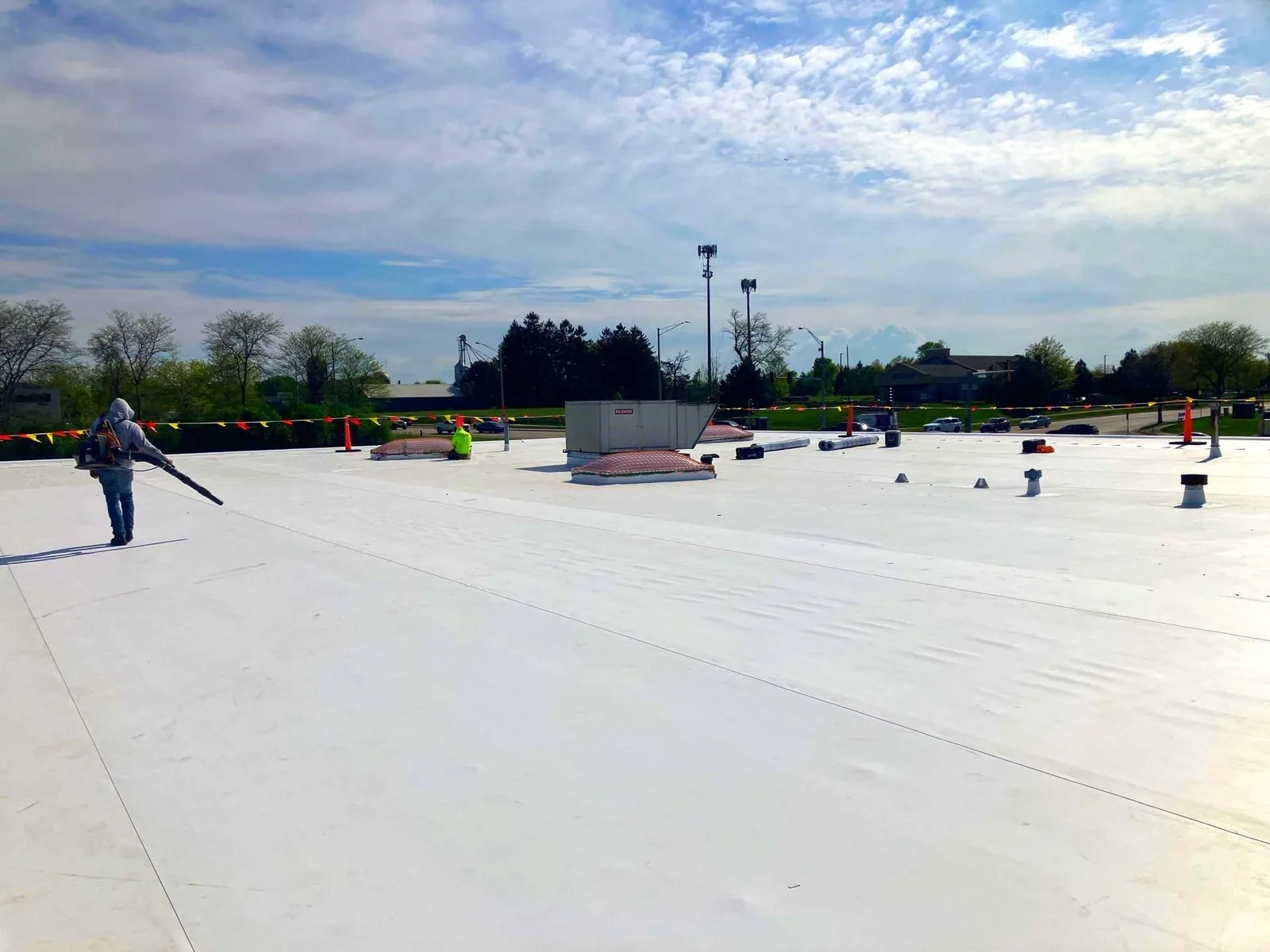
Three Ways to Attach a TPO Membrane
The right method depends on wind design, substrate, and building use. We walk through tradeoffs before the specification is locked.
Mechanically Attached
Fasteners and plates anchor the membrane; seams are heat-welded. Fastest to install and most cost-effective. Best for straightforward warehouse and industrial roofs.
Fully Adhered
Membrane bonded directly to the substrate with approved adhesives. Excellent wind-uplift performance, smoother finished appearance, and fewer field seams.
Ballasted
Loose-laid membrane held down by stone or pavers. Lower cost but requires the structure to support the ballast weight. Occasionally specified on re-covers.
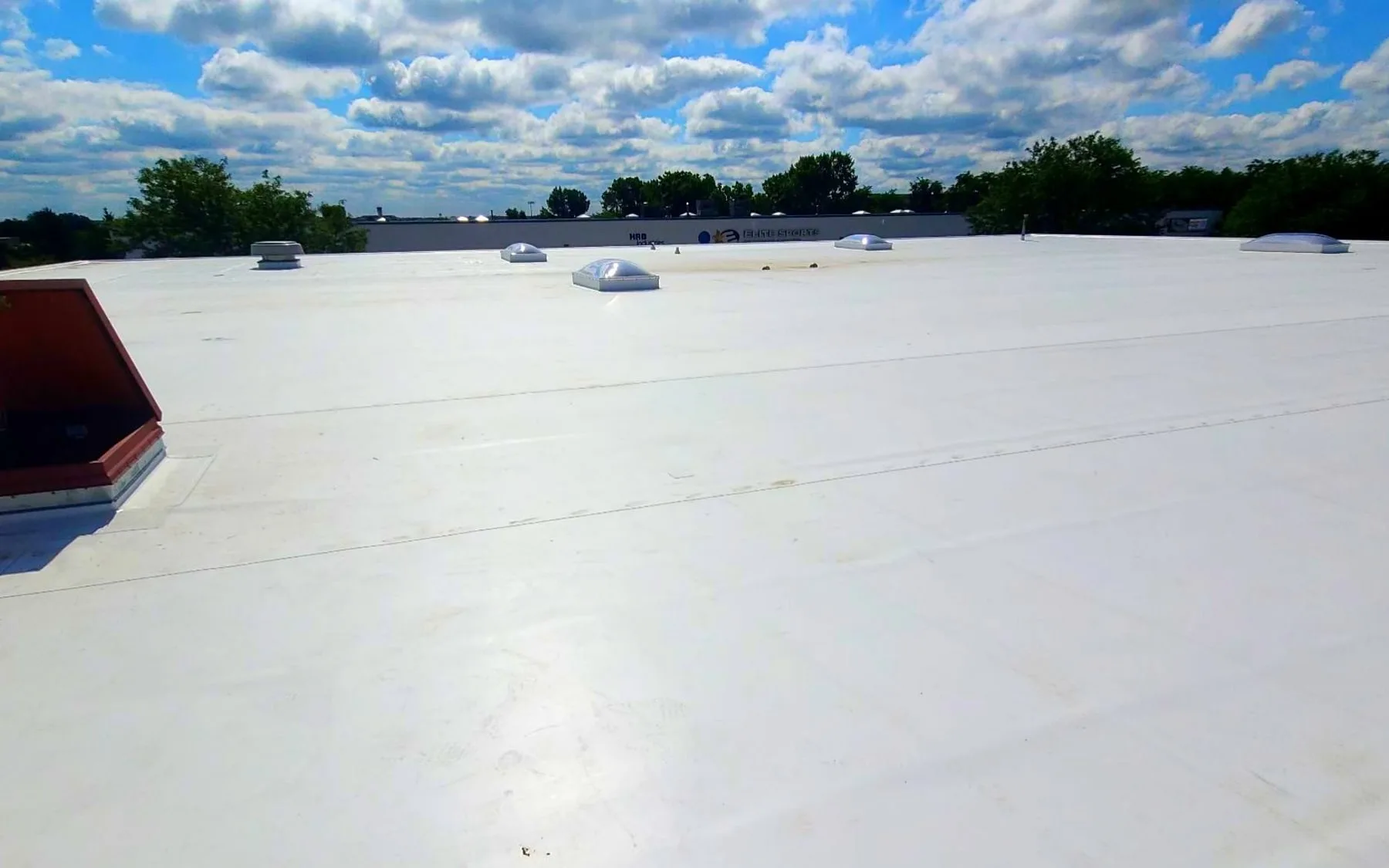
Why TPO Leads the Commercial Market
- Reflective surface: up to 87% solar reflectance cuts HVAC cooling loads
- Heat-welded seams: stronger than the membrane itself
- Proven durability: 20-30 year service life
- Cool-roof compliant: meets Chicago Energy Code reflectance
- NDL-eligible: manufacturer warranties up to 30 years
Six Factors We Evaluate Before Recommending TPO
TPO is a strong default. It's not the right call for every building. Our Proof-of-Value roof inspection evaluates each factor first.
Active Certifications. NDL Warranty Eligible.
Factory-trained and certified to warrant every install.
Full NDL warranty authority on Mule-Hide TPO single-ply systems.
Certified on FiberTite KEE-based membrane systems for institutional work.
Certified installer for JM TPO systems with Peak Advantage warranty.
Frequently Asked Questions
A properly installed TPO roof typically lasts 20 to 30 years. Thicker membranes (60-mil and 80-mil) consistently outperform 45-mil systems. Manufacturer NDL warranties on certified installations run up to 30 years.
TPO uses heat-welded seams (mechanically stronger than EPDM's glued seams) and its white surface reflects heat, reducing cooling loads. EPDM is a black rubber membrane with a longer track record and lower material cost at scale. The right choice depends on building use, energy goals, and hold period. We present cost-per-year analysis for both before any specification decision.
Yes, if the existing system is structurally sound, not moisture-saturated, and code requirements allow it. We use core samples and moisture probes before making the call. If recover is viable, you save time and cost versus a full tear-off.
Yes. TPO retains flexibility at sub-freezing temperatures, resisting cracking during the freeze-thaw cycles common in the Chicago suburbs. It also performs reliably under the wind uplift conditions that affect commercial roofs across the Chicago Tri-State Area including Will, Kane, DuPage, Cook counties, NW Indiana, and SE Wisconsin.
An NDL (No Dollar Limit) warranty is a manufacturer-backed labor-and-material warranty with no capped payout. If the system fails within the warranty term, the manufacturer covers full repair or replacement. Only certified contractors can issue NDL warranties. This is a documented risk-transfer instrument valued by lenders, insurers, and buyers during property transactions.
PVC is the better specification when rooftop chemical or grease exhaust is present (restaurants, food processing, manufacturing). PVC resists oils and chemicals that degrade TPO over time. For most other commercial applications, TPO offers comparable performance at a lower cost-per-year.