

Residential Roof Repair in the Chicago Suburbs
Root cause first, patch second. Honest diagnosis, lasting fixes, and storm damage documentation. Serving Will, Kane, DuPage, and Suburban Cook counties.
Why Diagnosis Matters More Than Speed
Many homeowners who call for a roof repair have already had one, done by someone else who patched what they could see and moved on. A few months later, the leak returns because the root cause was never found.
Roof leaks are rarely as simple as they appear from inside the house. Water enters through one point and travels along the roof deck, rafters, or ceiling joists before appearing somewhere else entirely. A water stain on a bedroom ceiling might trace back to a failed pipe boot three feet away, a cracked ridge cap, or a compromised valley.
We take time to identify the actual source of the issue before any work begins. That is not a slower process. It is the only process that produces a repair that holds past the next rainstorm.
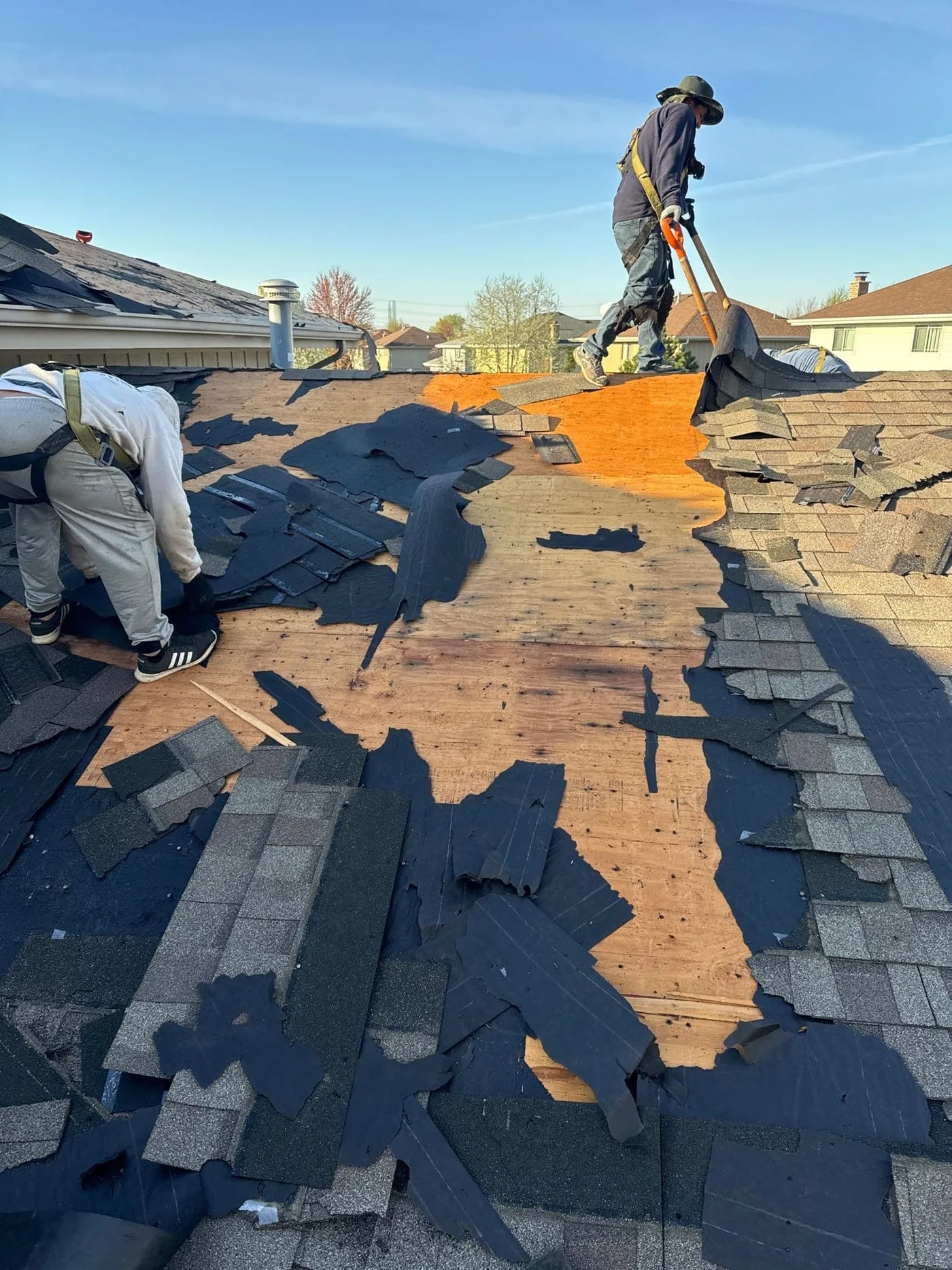
Common Residential Roof Repair Types
Flashing Repair and Replacement
Flashing failures are the most frequent source of residential roof leaks. Step flashing at wall-to-roof transitions, counter flashing at chimneys and skylights, and drip edge at eaves and rakes all degrade over time through thermal cycling, fastener backing out, and caulk deterioration. We remove and replace compromised flashing rather than recaulking over failed material.
Pipe Boot Replacement
The rubber collars that seal plumbing penetrations through the roof surface are one of the most consistent single-point failure locations on any residential roof. Original neoprene boots crack and shrink with age, particularly on south-facing slopes with high UV exposure. Boot replacement is a straightforward repair with an outsized impact on leak prevention.
Valley Repair
Open-metal and closed-cut valleys concentrate water flow from multiple roof planes and are subject to accelerated wear. Shingle displacement, granule loss, and flashing separation in valleys allow water to work through the system quickly. Valley repairs require careful integration with surrounding shingles to restore proper drainage geometry.
Field Shingle Repair
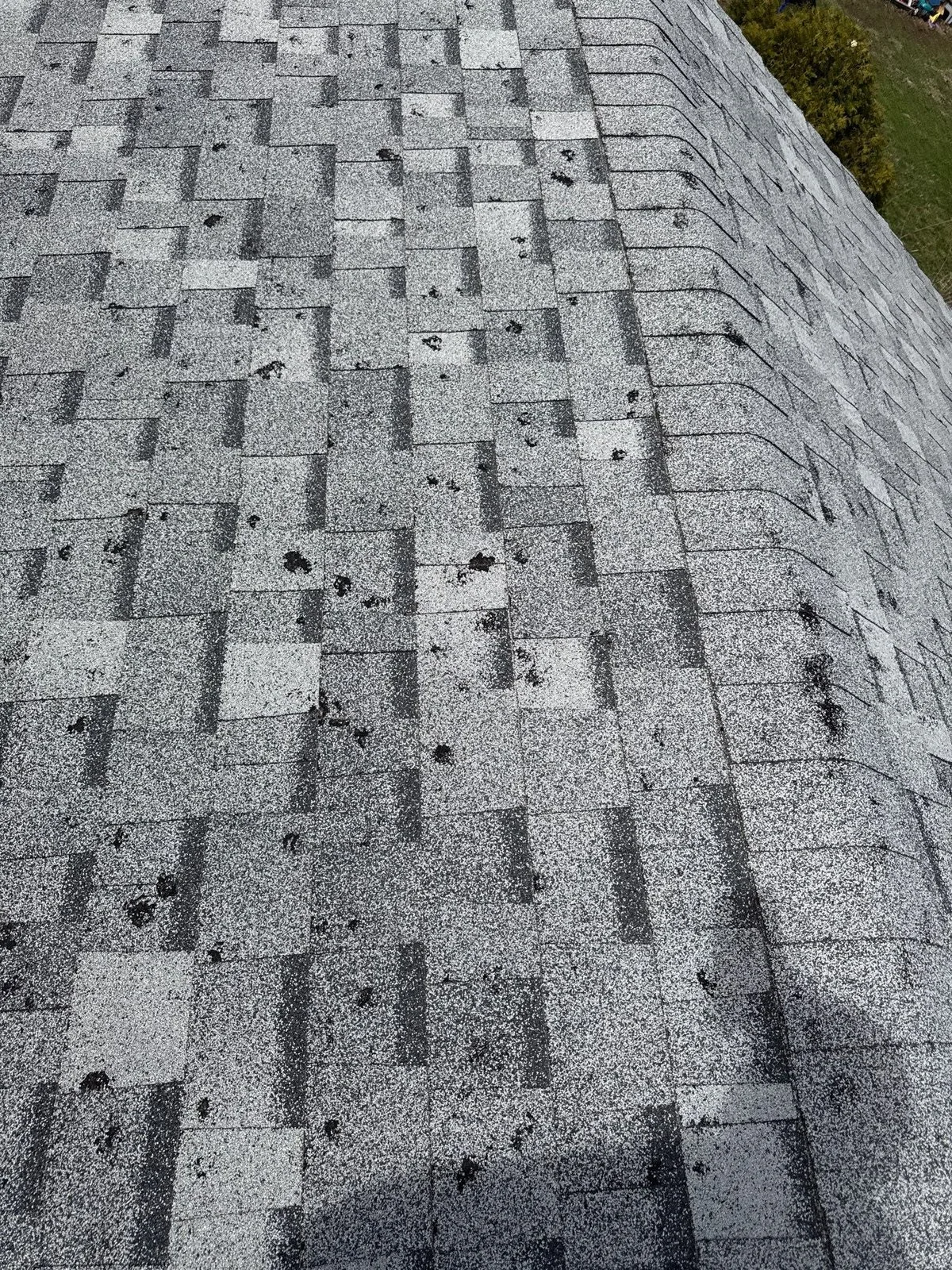
Wind, hail, foot traffic, falling branches, and general impact damage can displace, crack, or fracture individual shingles across the field area. We replace damaged shingles and assess the surrounding field for secondary damage, granule loss, and any fastener pattern issues that may have contributed to the failure.
Ridge Cap and Hip Shingle Repair
Ridge cap and hip shingles receive more weather exposure than any other part of the roof. Cracked, displaced, or missing ridge shingles create direct pathways for water and wind-driven rain into the system at the highest and most vulnerable point.
Penetration and Skylight Seals
Every roof penetration is a potential water entry point. We inspect and assess all penetrations as part of any repair diagnostic, and address deteriorated seals as both a standalone repair and as part of any broader repair scope.
When Repair Is the Right Answer and When It Is Not
Repair is the appropriate response when the underlying roof system is structurally sound, the damage is localized, and the remaining service life of the system justifies the repair investment. A ten-year-old roof with a failed pipe boot is a repair. A twenty-two-year-old roof with failing flashing at three separate locations, granule loss across the south slope, and soft spots in the deck sheathing is a replacement conversation.
We will tell you clearly which situation you are dealing with. If the honest answer is that repair is a short-term patch on a system that needs replacement, we say that. We do not perform repairs we know will fail in order to generate a second call.
Storm Damage and the Insurance Process
When hail, wind, or falling debris causes damage, insurance documentation becomes part of the process. We provide detailed written documentation of storm-related damage, photographs, damage descriptions, and repair scope to support a claim. Our team understands how insurance claims are evaluated and can help homeowners navigate that process accurately.
What we do not do: manufacture damage, inflate scopes to match what a claim might pay, or work backward from a desired insurance outcome. We identify what is actually damaged, document it accurately, and repair it correctly. That approach protects the homeowner.
Can You Repair Just a Few Shingles?
Yes, when the surrounding system is sound and the damage is genuinely isolated. Replacing a handful of shingles that were displaced by wind on an otherwise solid ten-year-old roof is a legitimate repair that makes sense. The caveats: replacement shingles rarely match the weathered color of existing shingles perfectly, and the repair is only as good as the underlying deck, flashing, and underlayment condition at the damaged area. We assess all of that before recommending a shingle-only repair as the appropriate scope.
Frequently Asked Questions
A roof leak can typically be repaired when the damage is localized, the surrounding roof system is structurally sound, and the remaining service life justifies the repair cost. Signs pointing toward replacement rather than repair include widespread shingle deterioration, multiple simultaneous leak points across different areas of the roof, significant deck sheathing damage, or a system that is already past its expected service life. A professional inspection with an honest inspection is the only reliable way to make that determination.
Yes, when the damage is genuinely isolated and the surrounding system is sound. Replacing wind-displaced shingles on an otherwise solid roof is a legitimate repair. Keep in mind that replacement shingles will rarely match the color of weathered existing shingles exactly, and the repair quality depends on the condition of the underlayment, deck, and flashing at the damaged location. We assess all of that before confirming shingle replacement as the right scope.
Residential roof repairs in the Chicago suburbs typically range from $400 to $2,500 depending on the type of repair, the extent of damage, and the accessibility of the problem area. Simple pipe boot replacements and minor flashing repairs are at the lower end of that range. Valley repairs, chimney flashing replacements, and multi-location storm damage repairs are at the higher end. We provide a written estimate before any work begins.
Coverage depends on the cause of loss and your specific policy. Storm damage from named perils like hail, wind, and falling trees is commonly covered; deterioration from normal aging is not. To know whether your damage qualifies, you need a documented inspection of the cause and extent of loss. We can provide that documentation and we understand how to present a claim accurately. We will tell you honestly whether what we find looks like a coverable loss before you invest time in the claim process.
The most common causes of residential roof leaks are failed flashing at chimneys, skylights, and wall-to-roof transitions; cracked or deteriorated pipe boots at plumbing penetrations; damaged valley systems; displaced or cracked shingles from wind or impact; and deteriorated ridge cap. In the Chicago suburbs, ice dams in winter can force water under shingles in ways that produce leaks appearing in spring, often attributed to a storm when the actual cause is an ice dam from months earlier. Most leaks have a specific, identifiable mechanical cause that can be isolated with a thorough diagnostic inspection.