

Entry Door Replacement in the Chicago Suburbs
An entry door replacement from Americanstruction delivers measurable improvements to energy performance, security, and curb appeal in a single project.
Choosing the Right Entry Door Material
Fiberglass entry doors are the most specified choice for the Chicago suburbs, and for good reason. Fiberglass does not dent, warp, or rust. It is dimensionally stable across the Midwest's wide temperature range. High-quality fiberglass doors like those in the ProVia Heritage and Embarq lines offer wood-grain textures that accept stain and closely replicate the appearance of solid wood while providing far superior energy performance. Fiberglass doors with polyurethane foam cores achieve R-values of 5 to 10.
Steel entry doors are the value tier of the residential door market. They are more impact-resistant than standard fiberglass and provide inherently strong security framing. The disadvantages in the Chicago climate are significant: steel conducts cold readily, creating a thermal bridge regardless of the foam core insulation value, and steel is susceptible to denting from impact damage.
Wood entry doors provide the most authentic aesthetic. The trade-off is maintenance: wood doors require refinishing every 3 to 5 years in a climate with the UV exposure and temperature cycling of the Chicago area. Marvin and Andersen's wood and wood-composite entry lines are built to reduce this maintenance burden, but wood entry doors remain the highest-maintenance option.
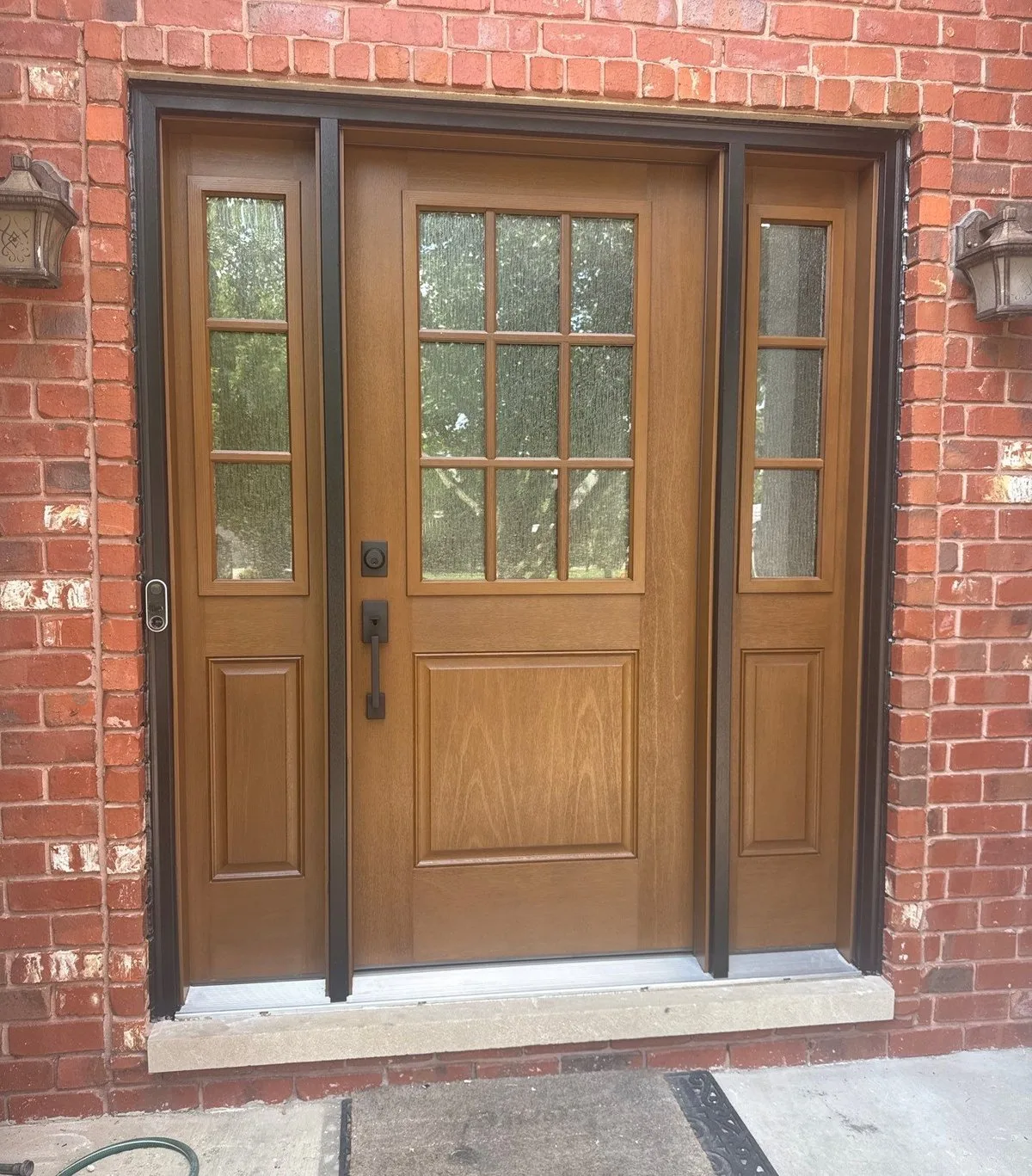
ProVia, Andersen, and Marvin Entry Options
ProVia
ProVia manufactures fiberglass and steel entry doors designed specifically for the Midwest residential replacement market. Their Heritage Collection fiberglass line offers paintable and stainable wood-grain finishes with polyurethane foam cores rated to R-8.5 to R-10. ProVia doors are available with multipoint locking systems, custom glass options, and sidelite configurations. Energy Star certification is standard across the fiberglass line.
Andersen
Andersen is best known for windows but produces a respected entry door line in wood and wood-composite materials. The 100 Series composite doors offer low-maintenance exterior surfaces with wood interior framing, providing the visual warmth of wood without the full exterior maintenance burden.
Marvin
Marvin entry doors are positioned at the premium architectural tier. Solid wood construction with excellent customization for historic, high-end residential, and design-forward applications. Marvin's Signature and Ultimate collections are appropriate for homes where authentic wood character is the non-negotiable priority.
Security Performance
Entry door security is a function of the door construction, the frame, and the hardware system. A strong door in a weak frame is not a secure entry. We verify frame condition before installation and address rot, damage, or inadequate framing before the new door is set. Multipoint locking systems engage the frame at the top, bottom, and latch point simultaneously, distributing force across three points rather than one and significantly improving resistance to forced entry compared to single-point deadbolts.
Energy Performance
An entry door is the largest operable penetration in an exterior wall. Air sealing at the frame and weatherstripping performance at all four sides determine real-world energy performance more than the door's nominal R-value. We install with properly adjusted weatherstripping on all four sides, compressed against the frame at close without binding, and with threshold seals that contact the floor sill. A door with an R-10 core and failed weatherstripping performs worse than a door with an R-5 core and tight seals.
Frequently Asked Questions
Fiberglass doors with polyurethane foam cores provide the best thermal performance, typically R-5 to R-10 depending on door thickness and construction. Real-world energy efficiency also depends heavily on the weatherstripping condition, threshold seal, and quality of the rough opening installation. An improperly installed high-R door underperforms a correctly installed lower-R door.
Quality fiberglass entry doors like those in the ProVia and Andersen lines are rated for 30 to 40 years of performance with minimal maintenance. They do not rust, warp, rot, or dent under normal residential use. The limiting factors are typically hardware life and glass seal integrity in sidelite or decorative glass units, both of which can be addressed independently without replacing the door slab.
Start with the performance requirements: energy efficiency, security, and low maintenance push toward fiberglass. Wood appearance authenticity with budget for maintenance pushes toward Marvin. Mid-range value with reliable performance across the product range lands at ProVia steel or fiberglass. Architectural style and neighborhood context inform the profile, finish, and glass selection. We walk through the decision with property owners as part of the estimate process.
Entry door replacement in the Chicago suburbs typically ranges from $2,500 to $7,000 installed, depending on door material, glass content, hardware specification, and frame condition. Full-frame replacements where framing repair is needed run higher. Marvin architectural configurations are priced separately. We provide written itemized estimates.